A little softness around your jawline or a slight change in your facial contours can make you wonder when your skin started losing its firmness. These changes are part of aging, but they don’t always mean you’re prepared for surgery.
Fortunately, modern skin tightening treatments offer another way to address early signs of skin laxity. Xerf is one option gaining attention for its needle-free approach to improving skin firmness and supporting natural collagen production.
Of course, Xerf isn’t the only treatment worth considering. Ultherapy also targets skin laxity, although it uses a different type of energy and treatment approach. Understanding these differences can help you make a more informed decision about your skin.
Keep reading to discover what makes Xerf appealing, how it compares with Ultherapy, and which factors matter most when choosing a treatment.
Why Xerf May Be Right for You
Xerf and Ultherapy both aim to improve skin firmness without surgery, but they use different technologies to accomplish that goal. If you’re considering Xerf, the following factors can help you understand its potential benefits and whether it matches your concerns.
1. Advanced Radiofrequency Technology
There are several nonsurgical skin-tightening treatments available today, each using different technologies to address skin laxity and stimulate collagen production. Ultherapy is one option that uses focused ultrasound energy to target specific depths beneath the skin, encouraging collagen production to gradually lift and tighten treated areas.
XERF takes a different approach, using advanced dual-frequency monopolar radiofrequency technology to deliver controlled heat across different tissue depths. This allows providers to customize treatments based on individual concerns and target areas, encouraging collagen remodeling to gradually improve skin firmness and elasticity.
While XERF is not a replacement for the dramatic lifting results of surgery, it can be a great option for patients experiencing mild to moderate skin laxity who want gradual, natural-looking improvements without an invasive procedure.
2. A Comfortable, Needle-Free Treatment
While both XERF and Ultherapy are noninvasive treatments that don’t require needles or incisions, the treatment experience can feel quite different. Ultherapy delivers focused ultrasound energy beneath the skin, which can produce intense sensations of heat, tingling, or discomfort, sometimes requiring pain management during treatment.
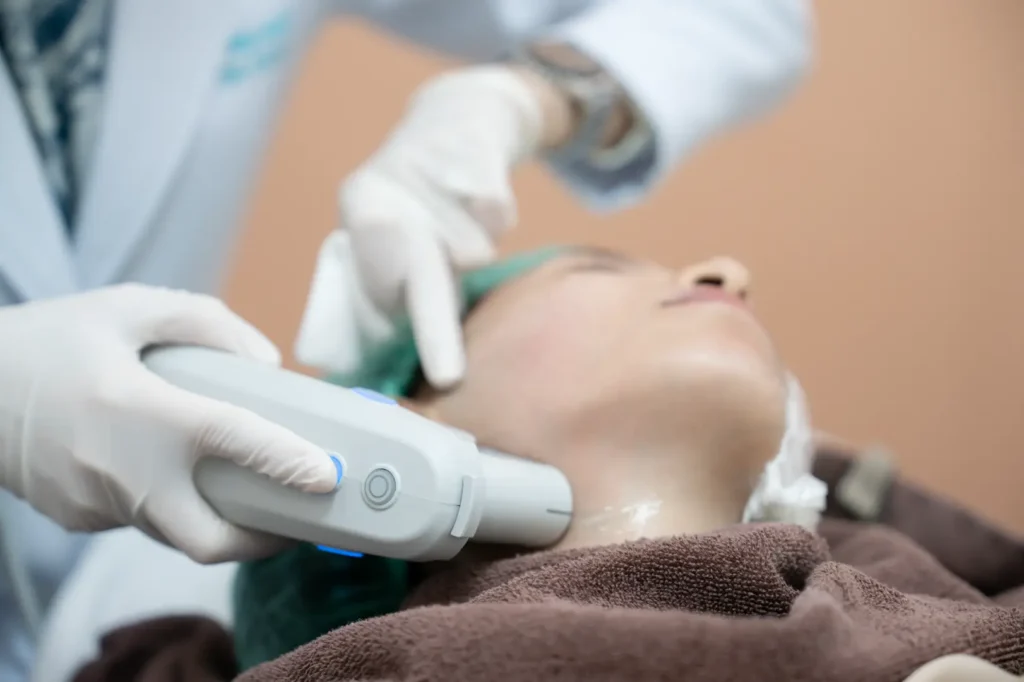
XERF, on the other hand, is designed with patient comfort in mind. During treatment, a specialized applicator is placed against the skin’s surface, delivering controlled radiofrequency energy while advanced cooling technology helps protect the skin and enhance comfort.
Patients typically experience a warming sensation, and many can complete their treatment without numbing. Treatment settings can also be adjusted based on the area being treated and individual comfort levels, allowing for a more personalized experience.
With minimal downtime, XERF offers an appealing option for patients looking to improve skin firmness with a comfortable, needle-free treatment experience
Neither technology should automatically be described as painless, as individual sensitivity and treatment intensity can affect the experience. For patients who prioritize a manageable treatment experience, understanding these differences can be especially helpful.
Comfort should be considered alongside effectiveness, safety, and the expected degree of improvement.
3. It Focuses on Collagen Remodeling
Collagen is one of the proteins responsible for giving skin its structure and resilience. As we age, collagen production gradually declines, contributing to changes in firmness, elasticity, and overall skin quality.
Environmental factors can accelerate these changes. Sun exposure, smoking, and other lifestyle influences may affect the skin’s structural proteins, making visible aging more noticeable over time.
Xerf uses controlled radiofrequency heating to encourage tissue remodeling. This makes it a potential collagen stimulation treatment for patients interested in addressing early signs of skin laxity.
The process doesn’t produce an entirely new facial structure. Instead, it aims to improve the condition of existing tissues through a gradual biological response. Some patients may notice an early change in firmness following treatment. However, improvements associated with collagen remodeling generally take longer to develop.
This gradual progression can appeal to patients who prefer subtle changes rather than an immediately dramatic transformation. It also means patience is important when evaluating treatment outcomes.
While collagen remodeling is a recognized effect of radiofrequency heating, the degree of visible improvement varies. Xerf shouldn’t be expected to reverse every structural change associated with aging.
4. It May Improve Jawline Definition
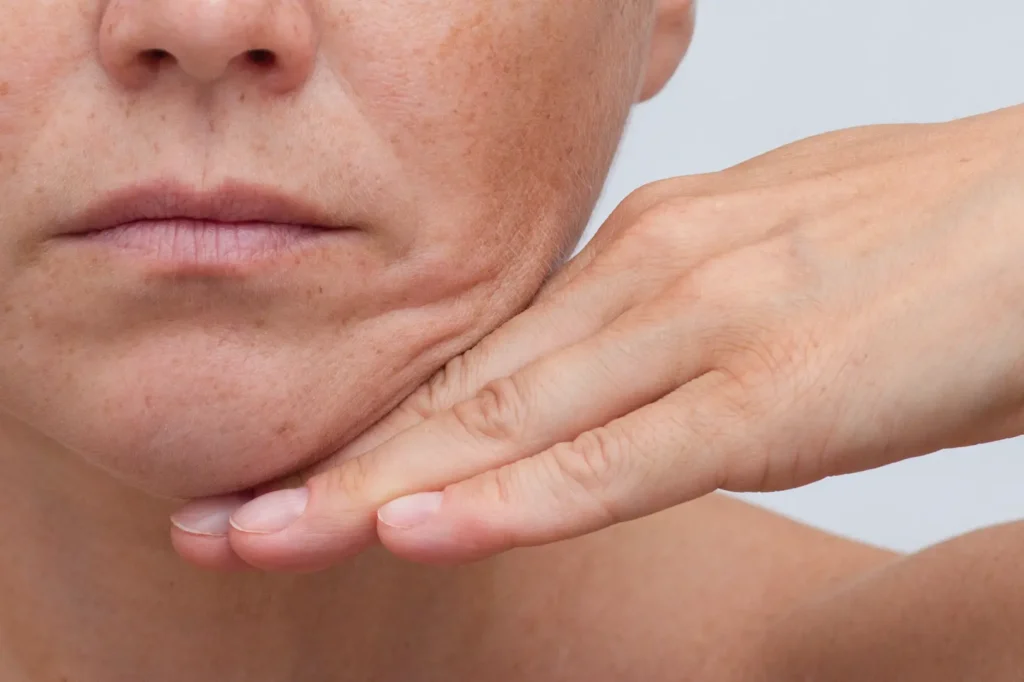
A softer jawline is one of the concerns that frequently motivates patients to explore nonsurgical rejuvenation. Over time, changes in skin elasticity, facial fat distribution, and underlying support can make the lower face appear less defined.
Xerf may help improve the appearance of mild laxity around the jawline by delivering controlled heat to selected tissues. As remodeling develops, some patients may notice a firmer-looking transition between the face and neck.
This can be appealing when the goal is refinement rather than a major change in facial structure. Patients may want their jawline to look slightly more defined without altering the features that make their appearance unique.
However, it’s important to distinguish skin tightening from surgical lifting. Xerf doesn’t remove substantial excess skin or reposition deeper facial structures in the way a facelift can. Someone with pronounced jowls or significant lower-face sagging may need a different treatment approach. In these cases, nonsurgical energy-based procedures may provide only modest improvement.
A professional assessment can help identify whether the concern is primarily related to skin laxity, volume loss, or another anatomical change. This information is essential when selecting the most appropriate procedure.
5. It Can Address Early Skin Laxity
Skin laxity doesn’t appear suddenly. It usually develops gradually as collagen, elastin, and other supporting structures change with age. You might first notice slight looseness around your cheeks, a less distinct jawline, or skin that doesn’t feel quite as firm as it once did. These early changes may be suitable for nonsurgical treatment, depending on your anatomy.
Xerf can be considered as a facial skin laxity treatment for patients whose concerns involve mild to moderate loss of firmness. Its radiofrequency technology is designed to deliver heat to targeted tissue layers without surgical incisions.
For some patients, addressing these changes earlier may provide a more satisfying result than waiting until laxity becomes extensive. However, treatment doesn’t stop the natural aging process or guarantee that future sagging won’t occur.
It’s also important to remember that skin laxity has several contributing factors. Significant weight changes, genetics, sun damage, and facial volume loss can all influence the appearance of the skin.
A personalized consultation helps determine whether radiofrequency tightening is likely to address the specific concern. Sometimes, another treatment may be more appropriate than Xerf.
6. Recovery Is Usually Minimal
A lengthy recovery period isn’t always practical, particularly for patients balancing professional responsibilities, family commitments, and social activities. This is another reason nonsurgical skin tightening has become appealing.
Because Xerf doesn’t involve surgical incisions or needle penetration, patients generally don’t require an extended healing period. Many can return to ordinary activities shortly after treatment.
Temporary redness, warmth, tenderness, or mild swelling may occur. These reactions usually resolve, although the duration varies depending on the individual and treatment settings.
More significant complications, including burns or unwanted tissue changes, are possible with radiofrequency procedures. Proper device operation and patient selection are therefore important.
Ultherapy also typically involves little downtime, although temporary swelling, tenderness, or altered sensations may occur. Both procedures should be discussed in terms of their individual risks rather than assuming one is completely free of side effects.
If you’re planning treatment around a special occasion, allow enough time to observe how your skin responds. Your provider can recommend a suitable schedule based on the procedure and your personal circumstances.
Give Your Skin a Thoughtful Upgrade
A refreshed appearance doesn’t always require a dramatic transformation. Xerf offers a noninvasive approach to skin tightening that may help improve firmness and support gradual collagen remodeling in appropriately selected patients.
At Infinite Youth Medical Spa in Minnetonka, MN, we typically recommend a series of two treatments spaced 4-6 weeks apart, depending on individual concerns and treatment goals. Results develop gradually as collagen remodeling occurs, with continued improvement possible over the following months.
Schedule a consultation to discover whether Xerf aligns with your goals and what kind of improvement you can realistically expect!